· DHinfra.at · News · 3 min read
After the summer break: the cluster now accepts all DHinfra.at and CLARIAH-AT partners
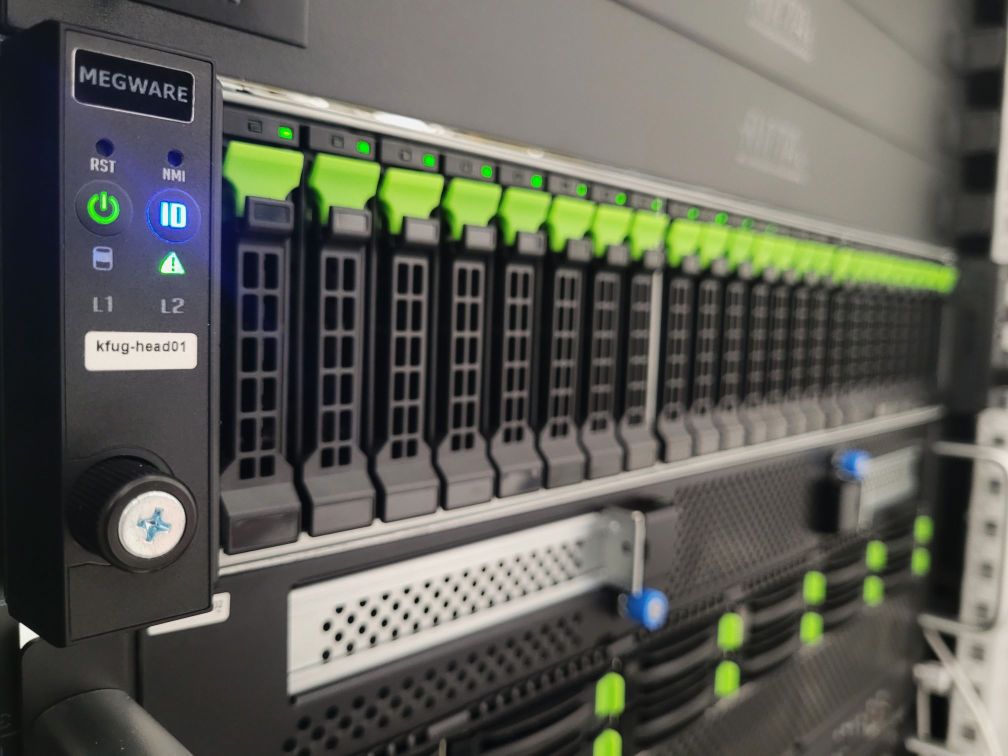
The DHinfra.at project ended in June after internal testing phases with partner projects. DHinfra-Gov has taken over, the firewalls are open, and the GPU and LLM cluster in Graz now accepts all members of the DHinfra.at consortium and CLARIAH-AT partner institutions. Further opening starts in October.
Until the DHinfra.at project ended in June 2026, the GPU and LLM cluster in Graz ran through internal testing phases with partner projects. Some of that work has appeared here, from information extraction on medieval account books and the DHd2026 workshop to video retrieval on a H200 and HTR for Latin inscriptions.
After the summer break, DHinfra-Gov has taken over: the CLARIAH-AT follow-up project Governance und Verstetigung DH-Infra.at, which carries the cluster from a project into regular operations.
Who can log in now
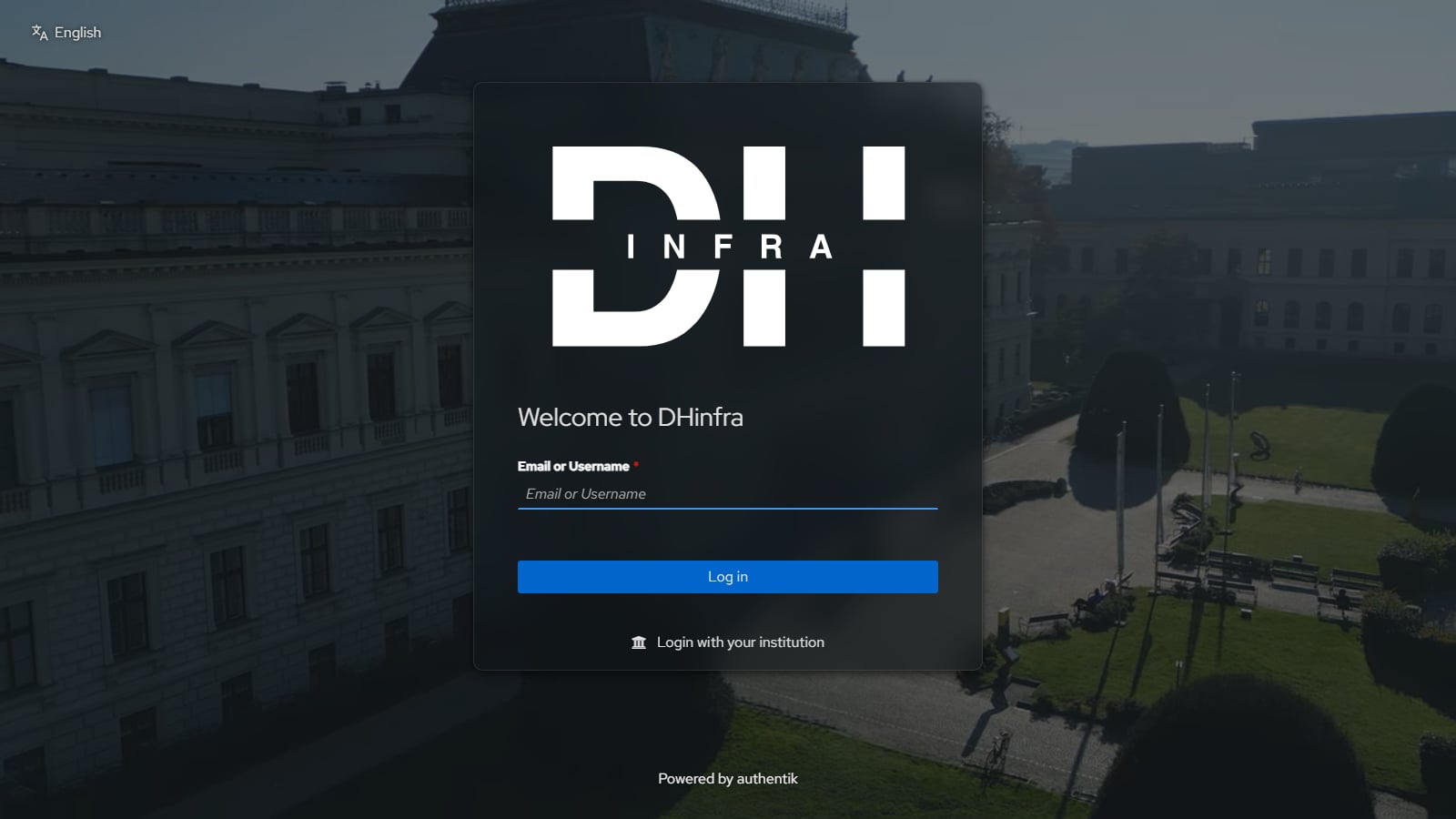
The firewalls are open. The cluster now accepts all members of the DHinfra.at consortium and of CLARIAH-AT partner institutions. Log in at login.dhinfra.uni-graz.at with the eduID account of your home institution, apply for a project in the console, and work: JupyterHub notebooks, SLURM batch jobs, shared storage, and a hosted, OpenAI-compatible API for language models, embeddings and reranking. The documentation sits behind the login, so log in first, then read the docs. The service policy is the document a project accepts when it applies, and the cluster status is at status.dhinfra.uni-graz.at.
If your institution is not part of DHinfra.at or CLARIAH-AT, please be patient. Further opening starts in October. Stay tuned.
Use cases you can open today
The pipelines that run on the cluster are collected at github.com/dhinfra-at/use-cases: notebooks, scripts and small sample datasets. Most of them are not tied to our cluster. They run on any Linux machine with NVIDIA GPUs, or against any OpenAI-compatible endpoint, so they are worth a look even before you have a project with us.
- Historical newspapers. Scanned Fraktur pages from ANNO, the digitised newspaper collection of the Austrian National Library, turned into searchable PAGE-XML: layout analysis with eynollah, OCR with Tesseract 5, optional post-correction, several GPU jobs in parallel. Two parts of the same work sit beside it, a parallel IIIF downloader for the page images and the job-ads pipeline of the Historical Job Ads project, which reads the Austrian labour market of 1850 to 1950 from newspaper advertisements.
- Kraken HTR for Latin inscriptions. Fine-tune a text-recognition model on 50 real inscriptions and 500 synthetic carved stones, four training recipes, minutes on a GPU. The generator for the synthetic stones is included. Background in the inscriptions post.
- LLM processing of medieval account books. Latin entries from the account books of Aldersbach Abbey go to the model API and come back as RDF/XML, scored against a manually encoded ground truth. Twenty evaluation reports from three open models are included. Background in the Aldersbach post.
Use cases from your own institution are welcome as a pull request. The repository README has the template and the checklist.
If you use the cluster, please name Digital Humanities Infrastructure Austria (DHinfra.at) in what comes out of it; the wording is on the impact page. Questions go to dhinfra@uni-graz.at.